
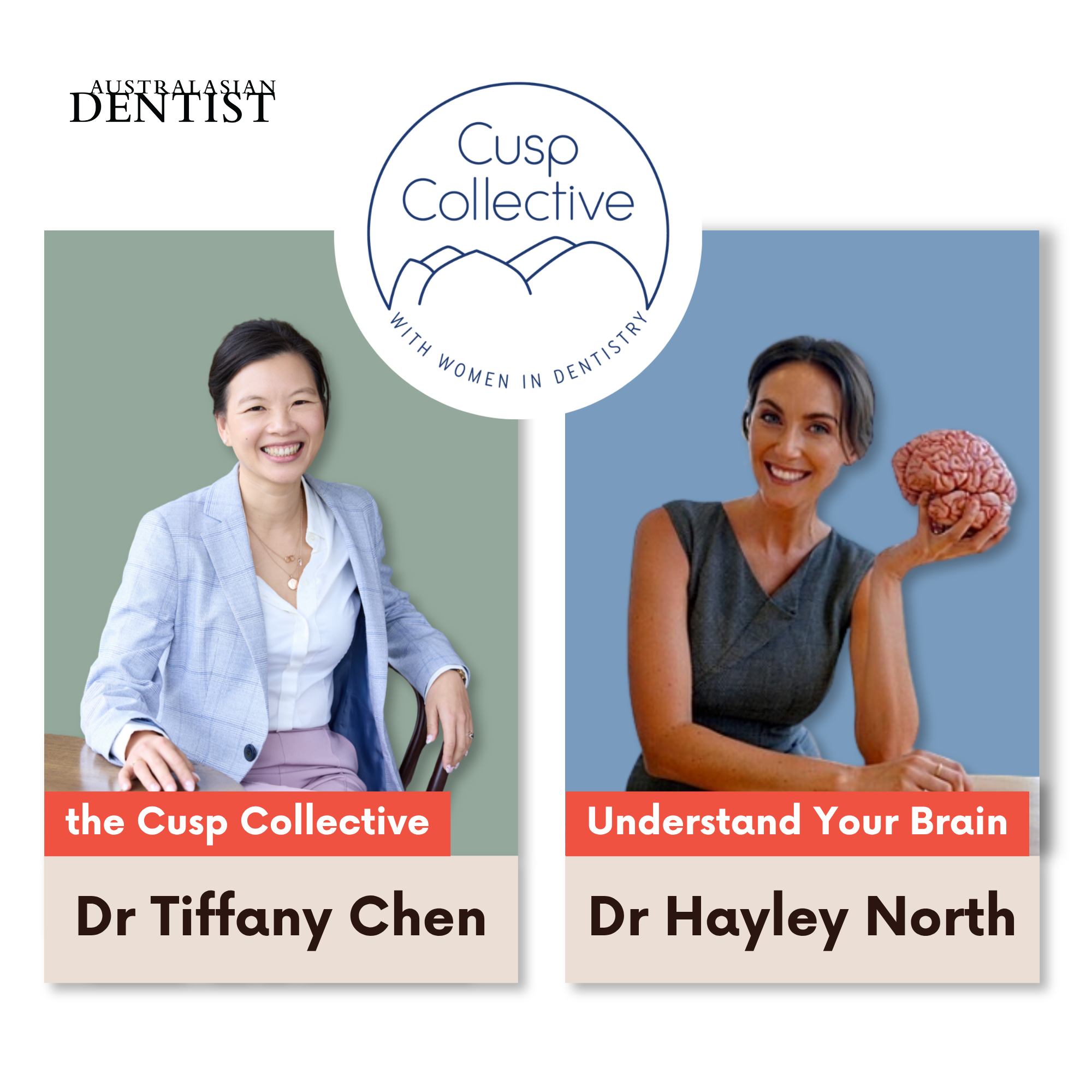
Dr Tiffany Chen, founder of The Cusp Collective, speaks with Dr Hayley North, neuroscientist and founder of Understand Your Brain, about the science behind how our brains perform (and quietly unravels) under the demands of clinical practice. Dr Chen believes a career you enjoy is the most sustainable one you can build. Because when work gives more than it drains, life gets better.
Q You are actively involved in neuroscience research right now. Can you please relate your work to the impacts on mental health for dentists working in stressful environments?
My research looks specifically at inflammatory pathways and their effect on brain health and functioning. Stress prepares the body for fight or flight and alters our immune system, which interestingly, has a big impact on our mental health. Most of us have experienced what scientists term “sickness behaviour”, which includes brain fog, lethargy, and low mood when we are unwell. That is the inflammation signalling to the brain to rest and conserve energy for healing.
For dentists working in high-pressure environments, this means being kind to yourself when you are run down, as inflammation means you are unlikely to be performing at your highest. It also highlights the importance of regulating your stress response before it becomes chronically heightened.
Q Dentistry demands precision and sustained focus for hours on end. What undermines this performance and what’s your advice on organising the day?
Research suggests that our brains operate in ultradian cycles, where after around 90 minutes of sustained mental focus on difficult tasks, we begin to fatigue. This means we should intersperse these periods of intense focus with short breaks to refresh the mind. In a dental setting, instead of scheduling multiple complex procedures back-to-back it can be more effective to alternate with less demanding procedures and admin work.
Q It is common for dentists to bear the brunt of patients’ fears and anxiety. What are your tips for resilience under this emotional load to remain empathetic and effective healthcare providers?
As humans, we are wired to be empathetic and are naturally influenced by the moods and anxieties of those around us. For dentists, especially women who often carry a strong empathetic load, this can mean absorbing patient anxiety throughout the day. Simply being aware of this can make a significant difference. If you notice your mood is being affected by anxious patients, developing a mindfulness practice can be highly beneficial. Mindfulness improves emotional intelligence, which is our ability to recognise and regulate our own emotions. It allows you to step back from your thoughts and feelings rather than operating on autopilot. This creates space to remain calm, empathetic, and effective, without becoming overwhelmed by the emotional load of the role.
Q Finally, looking at wellbeing through the lens of neuroscience, what are 3 practices you would encourage women in dentistry to adopt for a sustainable and enjoyable career?
The best science-backed practices for a sustainable and enjoyable career focus on looking after brain health, which underpins our performance, emotions, and overall wellbeing. The good news is this is often simpler than we think. What is good for the body is good for the brain.
Here are my three tips:
1. regular exercise, particularly moderate intensity cardio should be a priority in a busy dental schedule.
2. eating well is essential. This includes enough protein, complex carbohydrates, high fibre foods, colourful fruit and vegetables rich in antioxidants, non-processed foods, and ideally omega-3 from fish to help reduce inflammation.
3. socialising is a must for brain health. Humans are social by nature, and maintaining connections supports our ability to manage stress whilst also engages the brain in ways that can help reduce the risk of cognitive decline.
For example, The Cusp Collective’s annual Conference + Connect is a great place to socialise and engage your brain in an enriching way.
If you’re interested in building a career that gives more than it drains, sign up to Her Side of Dentistry Newsletter via www.thecuspcollective.com.au